


Laser rejuvenation
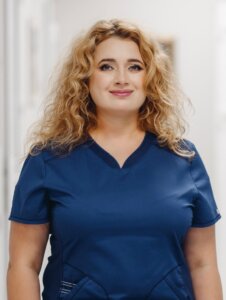
Laser rejuvenation is not only about reducing wrinkles but also about improving skin quality. Hanna Tsepkolenko, Head of the Department of Regenerative, Laser and…



The administrator of VIRTUS will contact you shortly

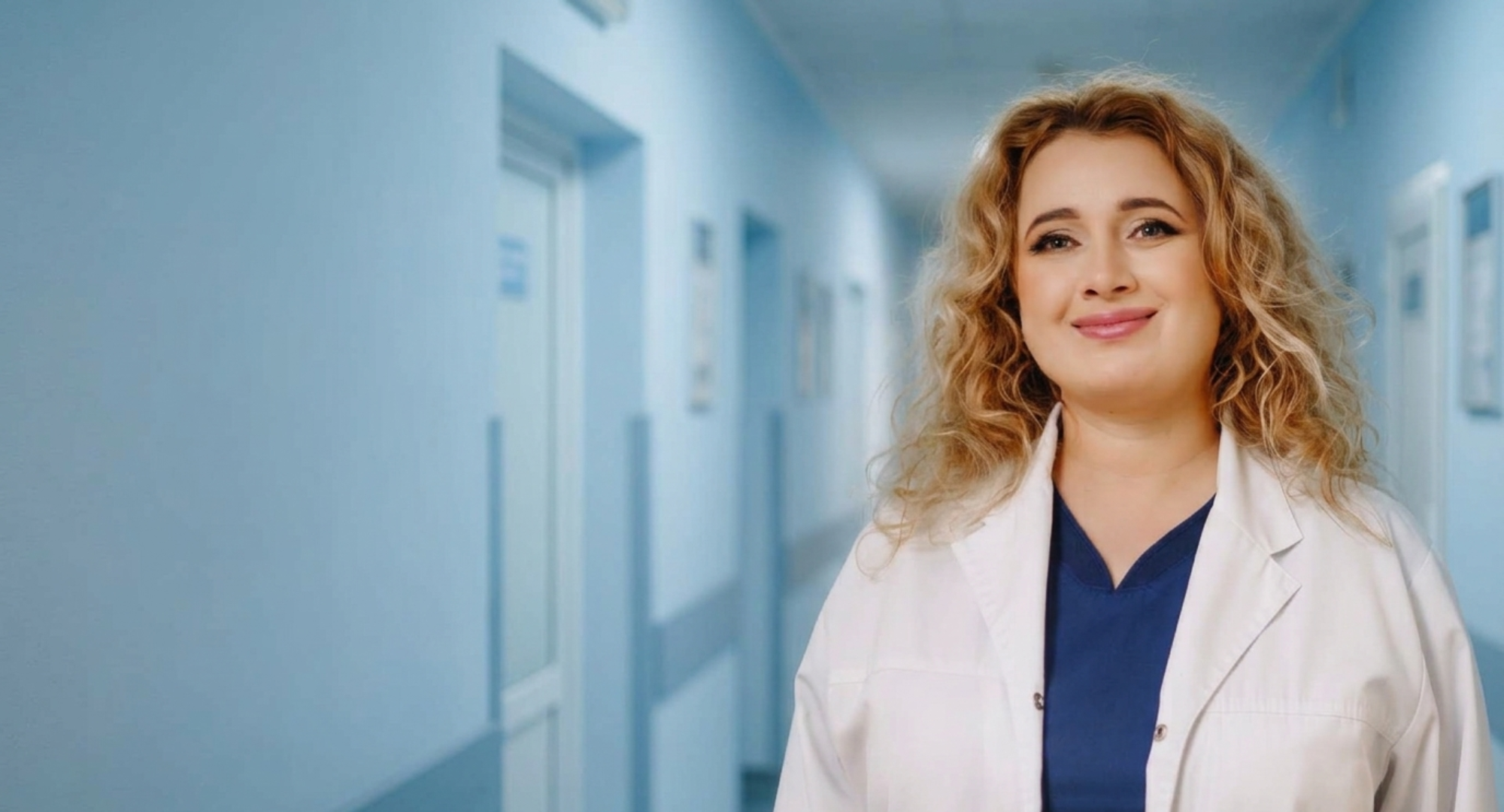


The safety of laser procedures depends on more than just the equipment. Anna Tsepkolenko, head of the Department of Regenerative, Laser, and Phototechnologies at the VIRTUS Institute, discusses what’s important to consider before a laser treatment, how to prepare your skin, and the myths surrounding laser technologies.
The results of laser procedures depend largely not on the equipment, but on how the doctor uses it. After all, it is the doctor who determines the laser’s power and selects the parameters based on the specific patient’s skin condition. Any device-based or injection procedure can be performed incorrectly: when working with a laser, as with other methods, it is important not to exceed the necessary exposure and not to overheat the skin.
That is why, before laser resurfacing or fractional laser treatment at VIRTUS, we conduct a diagnostic evaluation to properly select the parameters. It is better to undergo two or three procedures at a lower power setting than a single procedure with intense exposure. This approach helps avoid a prolonged recovery period (about two weeks), difficult rehabilitation, and hyperpigmentation.
Before performing fractional laser procedures at VIRTUS, we conduct a skin ultrasound to determine skin thickness in different areas, as well as the rate of cutaneous blood flow. If blood flow is reduced, we may add AMC procedures to improve skin quality.
Next, a home care regimen is selected. This may include cell-based creams used to regenerate the skin. It’s advisable to consult a gynecologist and an endocrinologist to balance hormone levels and, if necessary, prescribe hormone replacement therapy. It is precisely this combination that yields the best results and the shortest recovery time.
It’s best to undergo CO₂ laser procedures in the fall, when sun exposure is lower and you’re not looking to tan. The optimal time to schedule a «laser» appointment is on Friday. That way, you can spend Saturday and Sunday at home recovering and return to work on Monday.
The patient is prepared before the procedure. They arrive for the fractional CO₂ laser treatment about half an hour before the scheduled time. An antiseptic cream is applied to the skin, and the patient must wait 30–40 minutes for it to take effect. After that, the doctor performs the procedure. The settings are selected on an individual basis and depend on the patient’s skin type and condition.
On average, recovery after fractional CO₂ laser treatment takes three to five days. If the patient has significant scarring and requires more intensive treatment, recovery may take up to two weeks. After the procedure, it is very important to use sunscreen, as there is an increased risk of hyperpigmentation.
Laser procedures do not cause skin cancer on their own. However, not every lesion can be removed with a laser. Before removal, a dermatoscopy must be performed—a method by which the doctor evaluates the lesion, its contours, color uniformity, and changes in size. Based on these characteristics, a special dermatoscopic index is determined.
Therefore, the most important step before laser removal is an accurate diagnosis. Some growths can be removed with a laser, while others are not suitable for this method. In particular, pigmented nevi require surgical excision. If there is a risk of malignancy, the growth must also be completely excised. The treatment plan depends on the specific diagnosis. VIRTUS employs specialists in various fields—including an oncodermatologist and an oncological surgeon—who can develop an effective treatment plan.
There is also a myth that histological examination is impossible after laser removal of a lesion. But this is not true. The laser can operate in two modes: as a laser scalpel and as a tissue vaporization laser. First, in laser scalpel mode, the doctor takes a skin sample and sends it in a test tube for histological examination. After that, the remainder of the lesion can be vaporized with the laser.
Several laser procedures can be combined in a single visit. For example, this could include a fractional CO₂ laser for the eyelids, an ultrasonic lift for the lower two-thirds of the face, and a non-ablative laser for the entire face. This combination minimizes trauma, maximizes results, and shortens the recovery period.
The combination of procedures is selected on an individual basis depending on the specific patient’s needs.
Pigmentation following a laser procedure is considered a delayed complication. It most often appears around the sixth or seventh day after the procedure. Pigmentation can persist for up to 56 days—which is how long it takes for melanocytes (the cells that produce pigment) to regenerate.
Patients with Fitzpatrick skin types III–IV are at the highest risk for pigmentation. These are people with dark skin who tan easily, often with brown eyes and dark hair. They have a significantly higher number of melanocytes than fair-skinned patients with blue eyes and light hair. Therefore, they are more likely to develop pigmentation after a laser procedure. For such patients, it is better to take a gentle approach: perform several sessions at a low power setting rather than one or two sessions with aggressive treatment. This significantly reduces the risk of pigmentation.
If pigmentation does occur, there are special treatments available to correct it. In particular, creams are used that target the enzyme tyrosinase, which is involved in pigment formation. Serums containing vitamin C may also be used.
Laser therapy during menopause is performed following a detailed consultation with the patient. The doctor determines what issues are troubling her, what medications she is taking, and also takes into account changes in her hormonal balance.
During menopause, levels of female sex hormones decrease, which can be accompanied by thinning of the skin and a loss of skin firmness. Therefore, the first step for women aged 45 and older should be a consultation with a gynecologist. The second step is skin preparation as needed (use of platelet cryolysate, in-office procedures, and at-home care).
For patients traveling from abroad with limited time, preparation begins before their arrival. The doctor conducts an online consultation, determines the necessary scope of examinations and procedures, and plans further treatment.
Several procedures can be combined into a single visit. For example, during a single visit, one patient from another country underwent the administration of an autologous platelet-rich plasma concentrate, an ultrasound lift of the lower two-thirds of the face, removal of a lesion, non-ablative laser rejuvenation of the entire face to stimulate collagen and elastin and improve skin quality, as well as fractional CO₂ laser treatment of the eyelids.
The entire set of procedures took approximately one to two hours and was performed under intravenous anesthesia. Within a week, the woman looked normal and was able to return home.

Get useful tips for beauty and health from the best specialists of the VIRTUS Institute of Advanced Medicine!

 69
69  4 min.
 129 3 min.
 118 9 min.
 1257 2 min.
 288 6 min.
 355 4 min.
 396 7 min.
 487 6 min.
 573 4 min.


 Submit your review
 Ask a question


Leave an application for an appointment at the clinic
We thank you for contacting the VIRTUS Institute.
The administrators will contact you shortly to clarify the details of the visit.
Just leave your phone number - we will book you in within 1 minute.

We will definitely take your feedback into account to improve the quality of work and improve the standards of service of the Institute of Advanced Medicine “VIRTUS”. Have a nice day!
We invite you to review feedbacks on a special page, which contains video and text feedbacks from the site and the VIRTUS guestbook..
Every day we work to improve the quality of work and the standards of the VIRTUS Institute, and customers’ recognition is the most valuable asset that we are proud of!

Your question will be addressed to the VIRTUS subject-matter specialist.
Your question will be addressed to the VIRTUS subject-matter specialist. The answer will be sent to the specified e-mail, as well as to the “Questions and Answers” page without specifying your data
We hope you find it interesting and useful to study what questions were asked by other clients and patients of the VIRTUS Institute: