


Laser rejuvenation
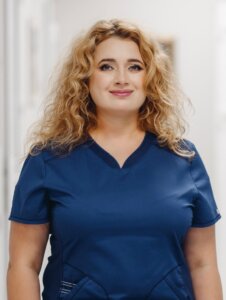
Laser rejuvenation is not only about reducing wrinkles but also about improving skin quality. Hanna Tsepkolenko, Head of the Department of Regenerative, Laser and…



The administrator of VIRTUS will contact you shortly

 128
128  3 min.


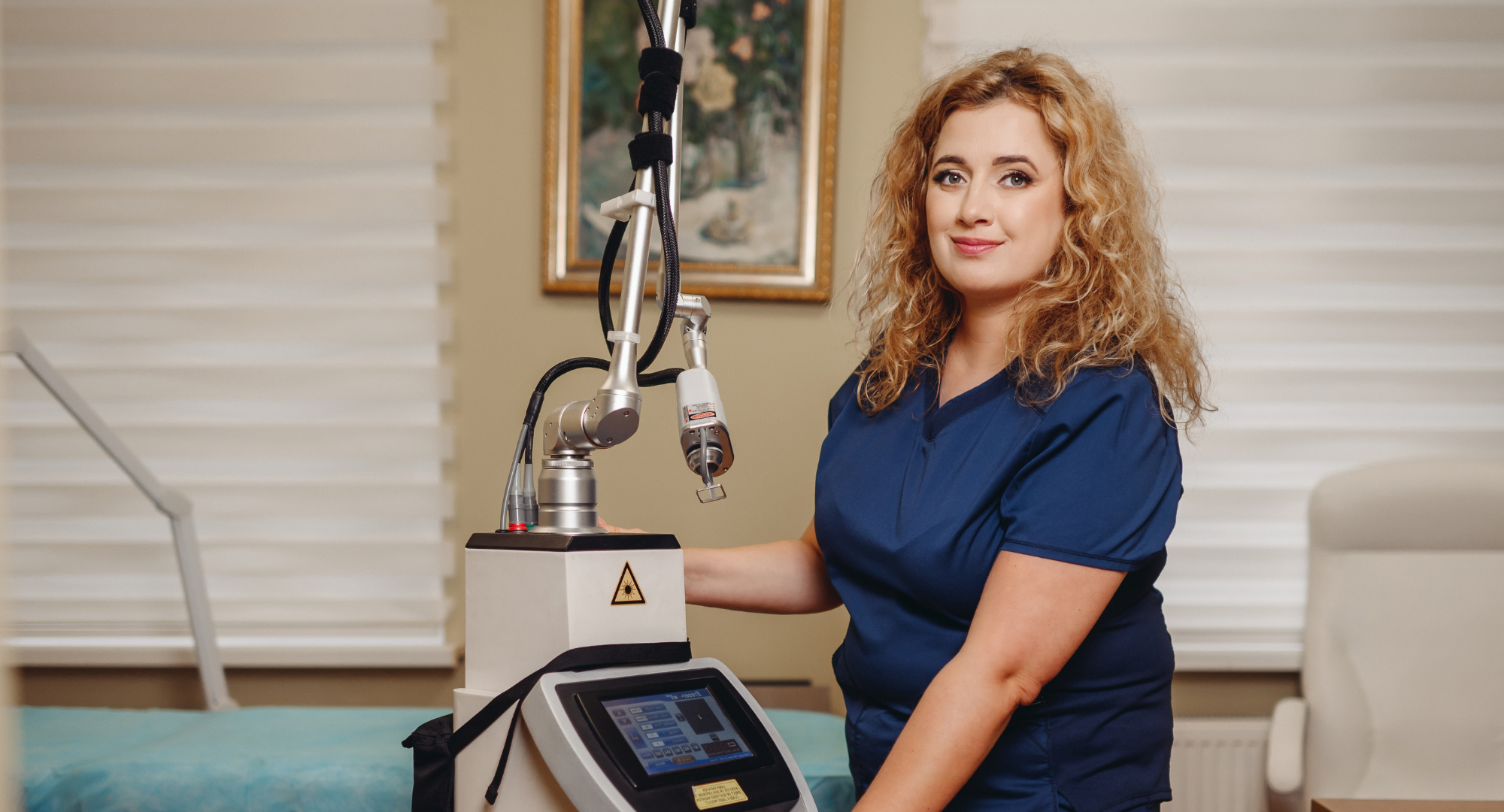
Various laser systems can be used to address a wide range of skin concerns. Hanna Tsepkolenko, Head of the Regenerative, Laser and Phototechnologies Department at VIRTUS Clinic, explains the capabilities of modern laser technologies, how the appropriate system is selected, and how different techniques can be combined.
The choice of laser technology primarily depends on the skin type and thickness, as well as the specific problem to be solved. At VIRTUS clinic there is the capability to work with practically all major types of laser equipment, which allows selecting a laser individually.
Non‑ablative laser technologies, which do not break the skin’s surface, are suitable for patients with fine‑lined ageing and thin skin. If the skin is denser and coarser, technologies that disrupt the skin’s surface and allow resurfacing and smoothing of texture are used more often — for example, fractional CO₂ laser.
It should be understood that the laser itself does not determine the outcome of a procedure. Any laser is only a tool in the hands of the physician. The doctor is the one who speaks with the patient, takes the medical history, sets the procedure parameters and selects the power. Therefore, even the same laser system can be used for different tasks depending on the specific situation.
For treating pigmentation, for example, VIRTUS uses the QuadroStar PRO YELLOW with two wavelengths. This equipment allows work on pigment and vessels, stimulates collagen, and performs non‑ablative laser rejuvenation without damaging the skin’s integrity. For acne sequelae, textural irregularities and scars, a fractional CO₂ laser is more often applied.
Different laser systems are also used for vascular removal: a neodymium laser for darker, blue vessels located deeper, and a diode laser for superficial vessels and capillaries. Combining different technologies makes it possible to achieve an effective result.
At the VIRTUS clinic procedures are performed using a combination of different technologies. For example, a surgeon can perform upper and lower eyelid surgery while a dermatovenereologist carries out facial resurfacing.
The clinic also practices the use of cellular technologies (for example, applying fibroblasts to the face, neck and décolleté) alongside plastic or gynecological operations. Performing gynecological surgery in particular is reasonable because cosmetic and gynecological problems are often related. For instance, patients with uterine fibroids may exhibit increased skin pigmentation. This is due to fibroids being stimulated by estrogen, and an excess of estrogen can cause sun‑induced spots — a symmetrically distributed pigmentation. Therefore, using the QuadroStar PRO YELLOW laser makes it possible to remove a uterine fibroid and address unaesthetic pigmentation at the same time. The patient receives the maximum benefit because both the cause and the consequence of the pigmentation are treated.
We live in the Instagram era, where appearance is constantly on display. For adolescents this is especially important: the condition of their skin, its smoothness and appearance can directly affect how confident they feel. That is why acne should not be regarded as a problem one will simply «outgrow.» It should be treated promptly, not postponed until age 18, because the longer treatment is delayed, the higher the risk of developing deep scars.
Treatment tactics depend on the severity of the acne. If there are up to 10 inflammatory lesions on the face, topical therapy is sufficient in many cases. But if there are more than 10 inflammatory lesions, oral retinoid‑based medications (vitamin A derivatives) should be added to the regimen. This group of drugs is widely used worldwide for acne treatment and is appropriately licensed. At VIRTUS, retinoids are used for acne treatment, which allows for very good results.
There are varying degrees of scar severity. If a patient has atrophic (depressed) scars, bio‑implantation is used. In this method the patient’s own blood is drawn, platelets are isolated and combined with the fat tissue. This platelet‑enriched fat is injected beneath the acne depressions using a separation technique. This smooths the skin surface.
Next, a fractional CO₂ laser procedure is performed to tighten the skin. This combination of treatments produces maximal effect and long‑lasting results while preserving a natural appearance. It also significantly improves skin quality thanks to the autologous platelet mesoconcentrate.
Facial vessels can be removed, and VIRTUS uses two lasers for this:
Both procedures can be combined in the same treatment room — on the diode and neodymium lasers — reducing the number of visits and increasing the procedure’s effectiveness.
Some patients tell the cosmetologist: «Grind me down to the bone.» But it should be understood that the skin has different layers — epidermis, dermis, basal membrane. If the basal membrane is disrupted, the result will not be youthful skin but a uniform white smooth scar. A «100%» result like that is not desirable for either the doctor or the patient. Therefore, resurfacing «down to the bone» is inadvisable. If one or two small wrinkles remain, that is very good — the result looks natural. By contrast, a smooth, glossy face is not a sign of health but a sign of basal membrane damage and conversion of the entire skin into a scar.

Get useful tips for beauty and health from the best specialists of the VIRTUS Institute of Advanced Medicine!
 68 4 min.
 71 4 min.
 117 9 min.
 1257 2 min.
 286 6 min.
 354 4 min.
 396 7 min.
 487 6 min.
 573 4 min.


 Submit your review
 Ask a question


Leave an application for an appointment at the clinic
We thank you for contacting the VIRTUS Institute.
The administrators will contact you shortly to clarify the details of the visit.
Just leave your phone number - we will book you in within 1 minute.

We will definitely take your feedback into account to improve the quality of work and improve the standards of service of the Institute of Advanced Medicine “VIRTUS”. Have a nice day!
We invite you to review feedbacks on a special page, which contains video and text feedbacks from the site and the VIRTUS guestbook..
Every day we work to improve the quality of work and the standards of the VIRTUS Institute, and customers’ recognition is the most valuable asset that we are proud of!

Your question will be addressed to the VIRTUS subject-matter specialist.
Your question will be addressed to the VIRTUS subject-matter specialist. The answer will be sent to the specified e-mail, as well as to the “Questions and Answers” page without specifying your data
We hope you find it interesting and useful to study what questions were asked by other clients and patients of the VIRTUS Institute: