


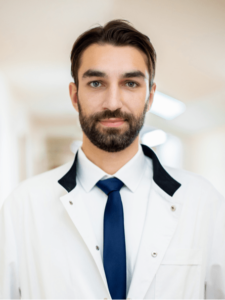
Laser rejuvenation
Laser rejuvenation is not only about reducing wrinkles but also about improving skin quality. Hanna Tsepkolenko, Head of the Department of Regenerative, Laser and…



The administrator of VIRTUS will contact you shortly


 387
387  3 min.


ENT surgery today is based on accurate diagnostics, modern treatment methods, and an individualized approach to each patient.
Leading ENT surgeon at the VIRTUS Institute, Dmytro Pylypiuk, discusses current approaches in otolaryngology and key aspects patients should know before consultation or treatment.
Both specialists treat diseases of the ear, throat, and nose, but their scope of practice differs. An ENT therapist primarily focuses on medical (conservative) treatment. An ENT surgeon, in addition to therapeutic knowledge, specializes in surgical treatment methods and can determine when surgery is the most effective option. The best outcomes are achieved when both specialists work as a team and follow modern clinical guidelines.

The main goal of an ENT surgeon during a consultation is to determine whether surgery is truly necessary. The doctor evaluates the patient’s complaints, examination results, and, if needed, analyzes CT scans, reviews the medical history, and only then develops a treatment plan. In some cases, non-surgical (conservative) treatment options are available. If they can provide a good outcome, surgery is not required. At the same time, there are urgent conditions when a decision must be made immediately. In such situations, a surgical intervention may be crucial for the patient’s health or even life.
Medicine is constantly evolving. What was considered the correct approach a few years ago may be revised today due to new research. That is why a doctor must continuously update their knowledge, follow international guidelines, read current scientific literature, and participate in professional conferences.
Without this, two extremes may occur:
It is important to evaluate each patient’s situation individually.
A fairly common situation is when a person uses nasal decongestant drops for years without even knowing the true cause of their breathing difficulty. The problem is that these medications do not address the underlying condition. Impaired nasal breathing may be caused by:
In some cases, drops only provide temporary symptom relief but do not treat the disease itself. If the cause is anatomical, medication will not provide a lasting result. With long-term use of decongestants, a full medical evaluation is necessary.
The name of a surgical procedure does not always reflect its quality. For example, in chronic polypoid rhinosinusitis, different surgeons may perform procedures with the same name. However, modern endoscopic surgery allows for much more precise work in hard-to-reach areas of the nose and paranasal sinuses, better control during the operation, and more effective outcomes. Therefore, it is important to consider not only the name of the procedure, but also the surgical technique, the clinic’s equipment, and the surgeon’s experience.
The outcome largely depends on the surgical technique and the surgeon’s experience. If the adenoid tissue is completely removed, regrowth does not occur. That is why adenotomy performed according to modern standards effectively resolves the problem without recurrence of the condition.
A consultation may last about 30 minutes, even if the diagnosis becomes clear at the beginning of the appointment. In reality, making a diagnosis is only part of the work. The doctor must:
Sometimes even half an hour is not enough, especially in cases involving complex surgical procedures. Modern medicine is increasingly based on a partnership model between doctor and patient. A person should understand what exactly will happen, why a particular treatment method is proposed, and what possible outcomes may be.
Complex ENT surgeries, such as endoscopic interventions at the skull base or a transsphenoidal approach to the pituitary gland, consist of multiple sequential steps. Certain stages are specific to skull base surgery — for example, opening the skull base, creating a vascularized mucosal flap, and subsequent reconstruction of the defect. If a standard procedure may include only a few main steps, complex surgeries involve many more, often significantly increasing the level of precision and coordination required.
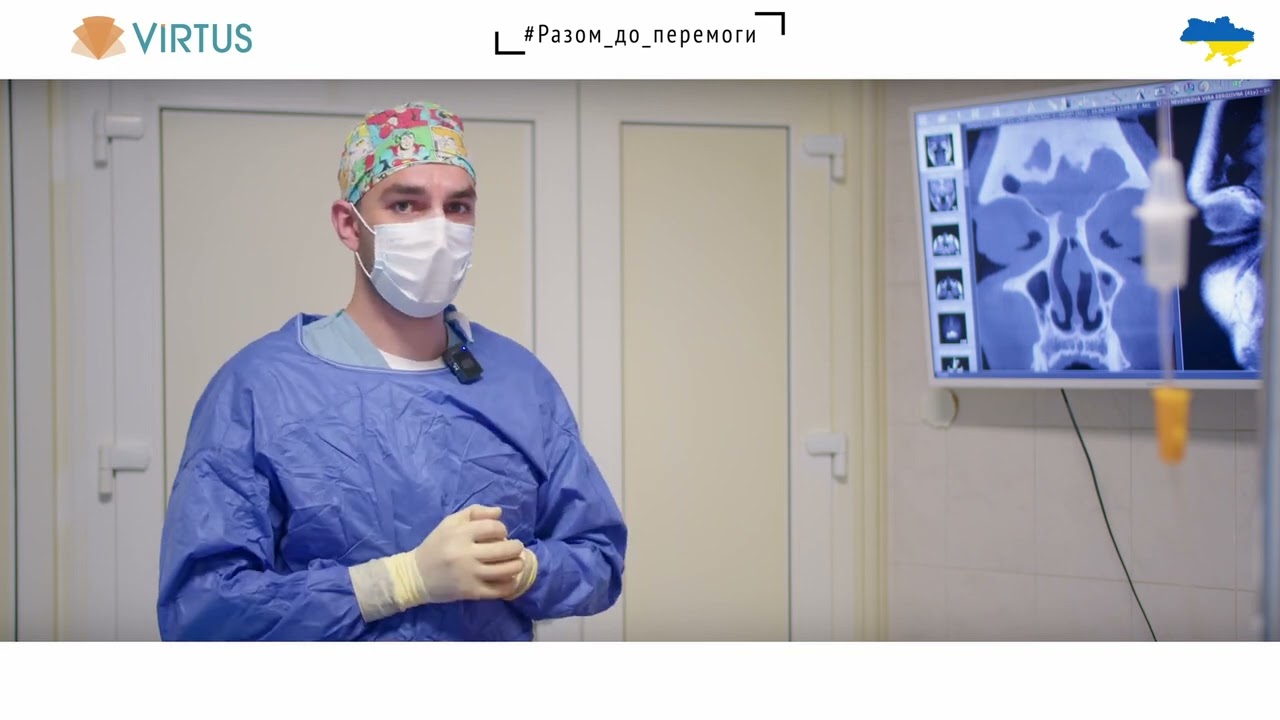
Modern medicine is developing so rapidly that a good doctor must be in a constant process of learning. The most important qualities include:
A good otolaryngologist does not aim to operate at any cost. Their task is to determine the most effective treatment method for each individual case, honestly explain all available options, discuss benefits and risks, and help the patient make an informed decision.

Get useful tips for beauty and health from the best specialists of the VIRTUS Institute of Advanced Medicine!
 67 4 min.
 71 4 min.
 126 3 min.
 116 9 min.
 1256 2 min.
 286 6 min.
 352 4 min.
 395 7 min.
 487 6 min.


 Submit your review
 Ask a question


Leave an application for an appointment at the clinic
We thank you for contacting the VIRTUS Institute.
The administrators will contact you shortly to clarify the details of the visit.
Just leave your phone number - we will book you in within 1 minute.

We will definitely take your feedback into account to improve the quality of work and improve the standards of service of the Institute of Advanced Medicine “VIRTUS”. Have a nice day!
We invite you to review feedbacks on a special page, which contains video and text feedbacks from the site and the VIRTUS guestbook..
Every day we work to improve the quality of work and the standards of the VIRTUS Institute, and customers’ recognition is the most valuable asset that we are proud of!

Your question will be addressed to the VIRTUS subject-matter specialist.
Your question will be addressed to the VIRTUS subject-matter specialist. The answer will be sent to the specified e-mail, as well as to the “Questions and Answers” page without specifying your data
We hope you find it interesting and useful to study what questions were asked by other clients and patients of the VIRTUS Institute: