



Laser rejuvenation
Laser rejuvenation is not only about reducing wrinkles but also about improving skin quality. Hanna Tsepkolenko, Head of the Department of Regenerative, Laser and…



The administrator of VIRTUS will contact you shortly


 577
577  4 min.


A lipoma is most often a benign formation that does not pose a threat to life, but it can cause aesthetic discomfort.
If you are unsure what to do with an unexplained lump on your head or body, schedule a consultation with a plastic surgeon at the VIRTUS Institute. The doctor will determine the nature of the lesion, choose the optimal removal method, and perform the procedure with maximum care.
A lipoma is a benign tumor composed of fatty tissue. It is usually located under the skin, has a soft consistency, moves easily when pressed, and grows slowly over time.
A lipoma typically appears as a movable lump under the skin. In the case of a diffuse lipoma, it does not have a clear capsule or defined borders — the fatty tissue is distributed in denser clusters over a larger area. This does not mean that the lipoma has «burst»; rather, it is formed in this way from the very beginning.
Lipomas can develop anywhere in the body where fat tissue is present: on the arm, leg, thigh, face, and other areas. On the abdomen, lipomas most often occur around the navel or along the linea alba. In such cases, it is important to carefully differentiate a lipoma from a lipocoele (hernia of the linea alba) or an umbilical hernia, which involve protrusion of internal organs through the anterior abdominal wall.
A lump on the side of the neck that resembles a lipoma is a common concern among patients at the VIRTUS Institute. However, a firm subcutaneous mass in this area may actually be a lateral neck cyst, a malignant tumor, a salivary gland tumor, inflammation of a cervical lymph node, or even a thyroid-related condition. To determine the exact nature of the pathology, an ultrasound is usually prescribed, and if necessary, a CT scan.
A swelling behind the ear is typically not a lipoma, since there is very little subcutaneous fat in this area. Instead, there are many sebaceous glands that can become blocked, forming an atheroma.
Women sometimes mistake a lump in the groin for a lipoma. In most cases, this is a result of irritation after laser or electro-epilation. In such situations, a consultation with a gynecologist is recommended, as it is important to determine whether a «lipoma» on the labia is actually inflammation of the Bartholin gland, a chronic infiltrative process, or an atheroma.
Patients often do not distinguish between lipomas and atheromas and refer to both as «fatty lumps.» Indeed, both conditions may look like small nodules under the skin. However, if the lump has a visible opening or «pore,» it is more likely an atheroma; if it does not, it is more likely a lipoma. Nevertheless, the exact diagnosis can only be made with the help of an ultrasound examination.
Modern medicine does not have a definitive answer regarding the causes of lipoma formation. However, genetic factors play an important role: lipomatosis (the presence of multiple lipomas throughout the body) is often observed across several generations within the same family.
Single lipomas may develop as a result of trauma. For example, if a person regularly wears a backpack and the strap repeatedly rubs against the same area, the body may respond by forming a localized subcutaneous thickening — a lipoma — as a kind of protective «cushion.»
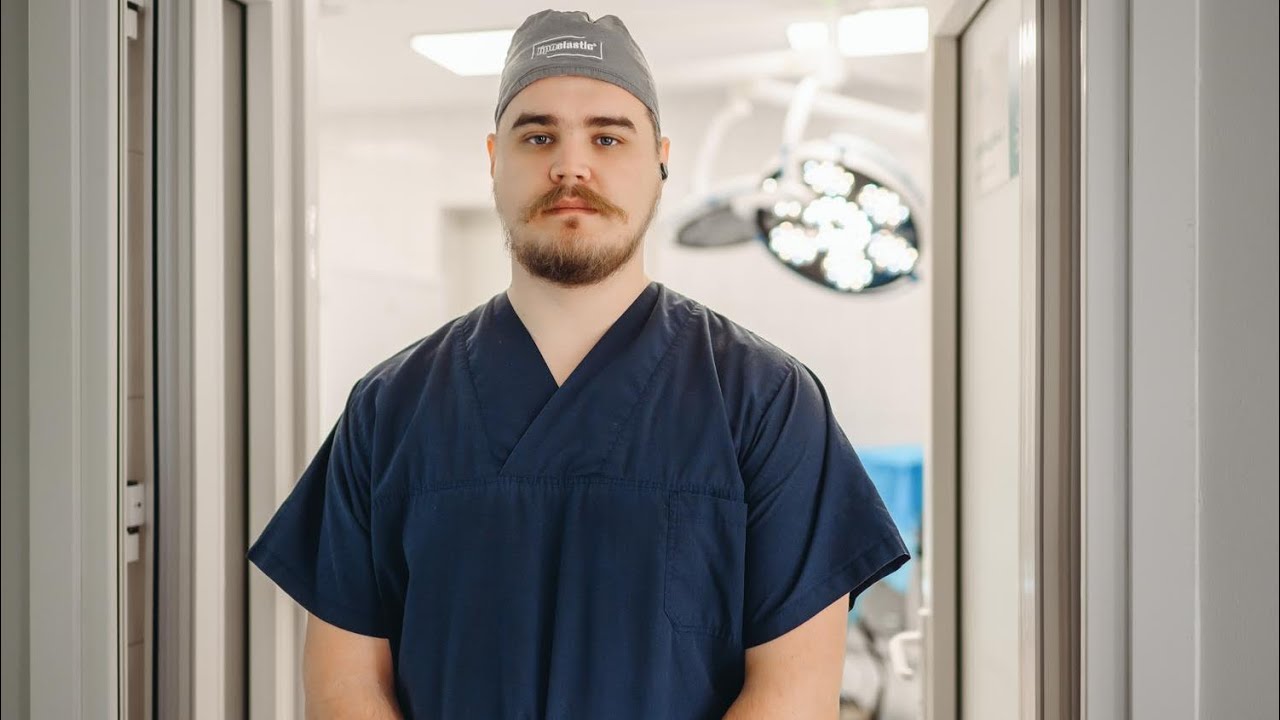
Lipomas are divided into single and multiple (lipomatosis). They can appear in any area of the body where there is a sufficient amount of subcutaneous fat tissue. Most commonly, lipomas are found on the head, neck, shoulders, arms, abdomen, and other similar areas.
In most cases, a lipoma causes only aesthetic discomfort. However, there are very rare instances where long-standing lipomas have transformed into liposarcomas — an aggressive form of cancer. With timely medical consultation and removal of the lesion, the risk of such a complication is minimal.
A lipoma is usually diagnosed by a surgeon during a physical examination and palpation. To reliably distinguish a lipoma from an atheroma or other types of formations, the patient is referred for an ultrasound examination.
At present, non-surgical treatment of lipomas is not possible, so surgical removal remains the only effective option. Depending on the size and location of the lipoma, treatment may involve surgical excision with a scalpel or laser followed by suturing, as well as liposuction.
A lipoma should be removed in all cases when it causes discomfort to the patient — whether it is only an aesthetic concern or if the lipoma is frequently traumatized due to friction with clothing. If a lipoma does not bother the person, removal is not mandatory.
After scheduling the procedure, the patient needs to undergo a complete blood count and a coagulation test, as surgical treatment of lipomas carries a risk of bleeding. If necessary (for example, in the presence of chronic conditions), it is recommended to consult a general practitioner and relevant specialists to receive additional guidance.
At VIRTUS, lipoma removal is a simple, fast, and highly standardized procedure. During surgery, the plastic surgeon makes an incision using a scalpel or laser, removes the lipoma, and places a neat cosmetic suture. If the lipoma is located on the head, there is usually no need to shave the hair.
As early as one hour after the procedure, the patient can leave the clinic and return to normal activities. Standard recommendations include avoiding heavy physical exertion, as well as saunas and steam baths. However, 48 hours after surgery, showering is allowed. A follow-up examination with the surgeon is performed the next day. If absorbable sutures are used, additional check-ups are usually scheduled after five days and one month. If non-absorbable sutures are used, they are typically removed about a week after the procedure.
A lipoma does not always need to be removed if it does not cause any discomfort. However, it is always reasonable to consult a plastic surgeon to confirm that the lesion is indeed a harmless lipoma.
A lipoma cannot disappear on its own or resolve completely. In the case of a lipoma, no ointment or cream will be effective. However, if it is traumatized, the capsule of the lipoma may rupture, and its contents can spread into the surrounding tissues. As a result, over time, fibrosis may develop — a thickening of connective tissue with scar formation.
Since modern medicine does not fully understand the mechanism of lipoma formation or why they occur, there are no specific preventive measures. The only recommendation that can be given is to consult a doctor in time when any «fatty lumps» or other skin growths appear.
A «fatty lump» is often a blockage of a sebaceous gland. The skin of the face and body produces sebum for moisturization, but when the gland’s duct becomes blocked, the secretion continues to accumulate without being able to escape. As a result, an atheroma forms — a kind of «bottle with a blocked neck» under the skin.
Patients may refer to atheromas, lipomas, or other conditions as «fatty lumps.» However, these are completely different conditions that must be properly differentiated.

Get useful tips for beauty and health from the best specialists of the VIRTUS Institute of Advanced Medicine!
 68 4 min.
 72 4 min.
 128 3 min.
 117 9 min.
 1257 2 min.
 286 6 min.
 355 4 min.
 396 7 min.
 487 6 min.


 Submit your review
 Ask a question


Leave an application for an appointment at the clinic
We thank you for contacting the VIRTUS Institute.
The administrators will contact you shortly to clarify the details of the visit.
Just leave your phone number - we will book you in within 1 minute.

We will definitely take your feedback into account to improve the quality of work and improve the standards of service of the Institute of Advanced Medicine “VIRTUS”. Have a nice day!
We invite you to review feedbacks on a special page, which contains video and text feedbacks from the site and the VIRTUS guestbook..
Every day we work to improve the quality of work and the standards of the VIRTUS Institute, and customers’ recognition is the most valuable asset that we are proud of!

Your question will be addressed to the VIRTUS subject-matter specialist.
Your question will be addressed to the VIRTUS subject-matter specialist. The answer will be sent to the specified e-mail, as well as to the “Questions and Answers” page without specifying your data
We hope you find it interesting and useful to study what questions were asked by other clients and patients of the VIRTUS Institute: