



Laser rejuvenation
Laser rejuvenation is not only about reducing wrinkles but also about improving skin quality. Hanna Tsepkolenko, Head of the Department of Regenerative, Laser and…



The administrator of VIRTUS will contact you shortly

 547
547  4 min.


The most effective method of correcting breast shape in cases of ptosis is plastic surgery, namely mastopexy (breast lift surgery).
Depending on the degree of breast ptosis, several breast lift techniques are available. At the VIRTUS Institute, patients can address multiple concerns during a single procedure and achieve the beautiful breasts they have always dreamed of.
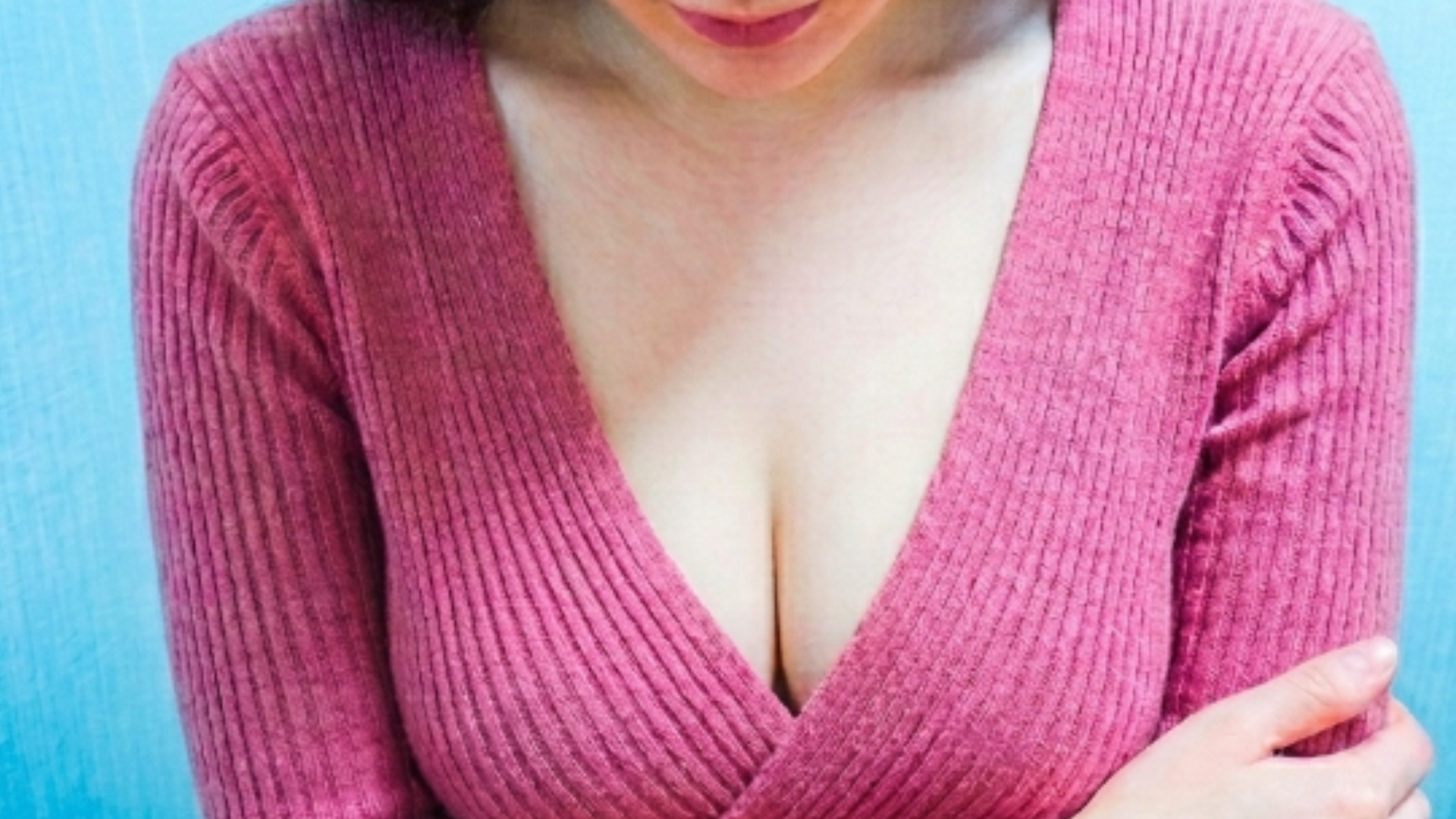
Breast ptosis is the medical term for the sagging of the breasts. The breasts take on a teardrop shape, lose volume and firmness, and the nipples shift downward. This happens because the breasts contain no muscles—their shape is supported by the skin and Cooper’s ligaments. Over time, under the influence of various factors, this supporting framework stretches, causing the breasts to sag.
Breast sagging is a natural process influenced, among other things, by age-related changes that reduce the production of collagen and elastin. As a result, Cooper’s ligaments and the skin stretch and can no longer maintain the breast shape. In younger women, breast ptosis may develop due to rapid weight loss, pregnancy, and breastfeeding.
During pregnancy, hormonal changes cause the mammary glands to enlarge. After childbirth, hormone levels gradually return to their previous state, so the breast tissue decreases in volume again, while the skin has already stretched. As a result, the breasts sag due to excess skin and loss of volume.
As the body prepares for lactation, the breasts fill with milk, increasing their weight. The supporting ligaments and skin are unable to cope with the additional load. There are also other contributing factors: if the baby frequently pulls on the nipples, they may stretch and even become injured. In addition, breastfeeding in the same position repeatedly may lead to uneven stress on the breasts and reduced breast firmness. All of these factors directly contribute to breast sagging after breastfeeding.
The breast contains a certain amount of fatty tissue. During weight loss, this fatty tissue decreases, reducing breast volume while the skin remains stretched. As a result, the breasts sag after losing weight.
Normally, the nipple-areola complex is located above the inframammary fold (the natural fold beneath the breast where the underwire of a bra rests). In cases of breast ptosis, their relative position changes. Accordingly, three degrees of breast sagging are distinguished:
The skin’s ability to contract naturally and improve breast shape depends on skin quality and age. Theoretically, younger women may have a chance to improve breast shape without surgery.
Unfortunately, non-surgical methods of correcting sagging breasts have very limited effectiveness. Physical exercise can strengthen the pectoral muscles, but it cannot remove excess skin or restore the position of the mammary glands. It is also impossible to increase breast volume through exercise because the breasts consist of glandular and fatty tissue rather than muscle. Massage and supportive shapewear are also of limited benefit.
The most effective way to restore breast shape is surgical breast lift (mastopexy). To determine which procedure will provide the best possible result, you should schedule a consultation with a plastic surgeon at the VIRTUS Institute. This can be done after breastfeeding has ended, once prolactin and other hormone levels have returned to normal. If prolactin levels remain elevated six months after breastfeeding has stopped, the doctor may prescribe medication to lower them.
A breast lift is recommended when a woman experiences physical or emotional discomfort due to sagging breasts. For Grade I ptosis, breast lift surgery alone usually provides excellent results. If additional volume is required, periareolar mastopexy may be combined with bio-implantation (using the patient’s own fat tissue) or breast implants.
Before surgery, all necessary laboratory tests should be completed, including hormone testing and a breast ultrasound examination. If the patient smokes, it is advisable to quit during the surgery and recovery period to promote better scar healing.
The procedure is usually scheduled 6–12 months after breastfeeding has ended, depending on prolactin levels. If a woman has given birth but did not breastfeed, breast surgery can generally be performed one year after childbirth.
Breast lift surgery takes from 40 minutes to three hours, depending on the extent of the procedure. The following breast lift techniques are used:
The extent of the procedure depends on the degree of breast ptosis and is determined during the consultation with the plastic surgeon.
A breast lift may be combined with breast implant placement or fat grafting (bio-implantation). In addition, if the duration of surgery allows, abdominoplasty (tummy tuck) can be performed simultaneously, allowing two concerns to be addressed during a single operation.
The first results of breast lift surgery can be seen as early as the first postoperative dressing change: the breasts are lifted and positioned where they should naturally be. However, the final outcome can be fully evaluated approximately six months after surgery, once the scars have completely healed.
After breast lift surgery, the patient usually stays in the hospital for one to two days. During this period, she receives medications to reduce swelling, as well as anti-inflammatory drugs and pain relievers.
The patient wears a special compression garment, which should be worn for one month. A full shower is usually permitted 7–9 days after surgery, although the areas of the body that were not operated on may be washed immediately.
During the first month after surgery, the patient should visit the surgeon at least three times for follow-up examinations and dressing changes.
The plastic surgeon will also recommend:
In most cases, if healing progresses normally, the patient can return to her usual daily routine the following month.
Since breast ptosis is a natural process associated with age-related hormonal changes, preventive measures can only provide limited results. However, to help reduce breast sagging, it is recommended to:
These measures cannot guarantee that the breasts will never sag, but they can help maintain skin elasticity and breast support for as long as possible.
Physical exercise cannot increase the volume of glandular breast tissue or tighten excess skin. While it is possible to strengthen the chest muscles, this does not eliminate breast ptosis.
During weight loss, the breasts lose part of their fatty tissue, resulting in decreased breast volume while excess skin remains. As a result, the breasts begin to sag.
It is impossible to completely prevent breast sagging. Exercises, supportive underwear, and special creams have only a limited effect. However, if a woman is dissatisfied with the appearance of breast ptosis, she can consult a plastic surgeon and undergo breast lift surgery.

Get useful tips for beauty and health from the best specialists of the VIRTUS Institute of Advanced Medicine!
 68 4 min.
 72 4 min.
 128 3 min.
 117 9 min.
 1257 2 min.
 286 6 min.
 355 4 min.
 396 7 min.
 487 6 min.


 Submit your review
 Ask a question


Leave an application for an appointment at the clinic
We thank you for contacting the VIRTUS Institute.
The administrators will contact you shortly to clarify the details of the visit.
Just leave your phone number - we will book you in within 1 minute.

We will definitely take your feedback into account to improve the quality of work and improve the standards of service of the Institute of Advanced Medicine “VIRTUS”. Have a nice day!
We invite you to review feedbacks on a special page, which contains video and text feedbacks from the site and the VIRTUS guestbook..
Every day we work to improve the quality of work and the standards of the VIRTUS Institute, and customers’ recognition is the most valuable asset that we are proud of!

Your question will be addressed to the VIRTUS subject-matter specialist.
Your question will be addressed to the VIRTUS subject-matter specialist. The answer will be sent to the specified e-mail, as well as to the “Questions and Answers” page without specifying your data
We hope you find it interesting and useful to study what questions were asked by other clients and patients of the VIRTUS Institute: