



Laser rejuvenation
Laser rejuvenation is not only about reducing wrinkles but also about improving skin quality. Hanna Tsepkolenko, Head of the Department of Regenerative, Laser and…



The administrator of VIRTUS will contact you shortly

 572
572  4 min.


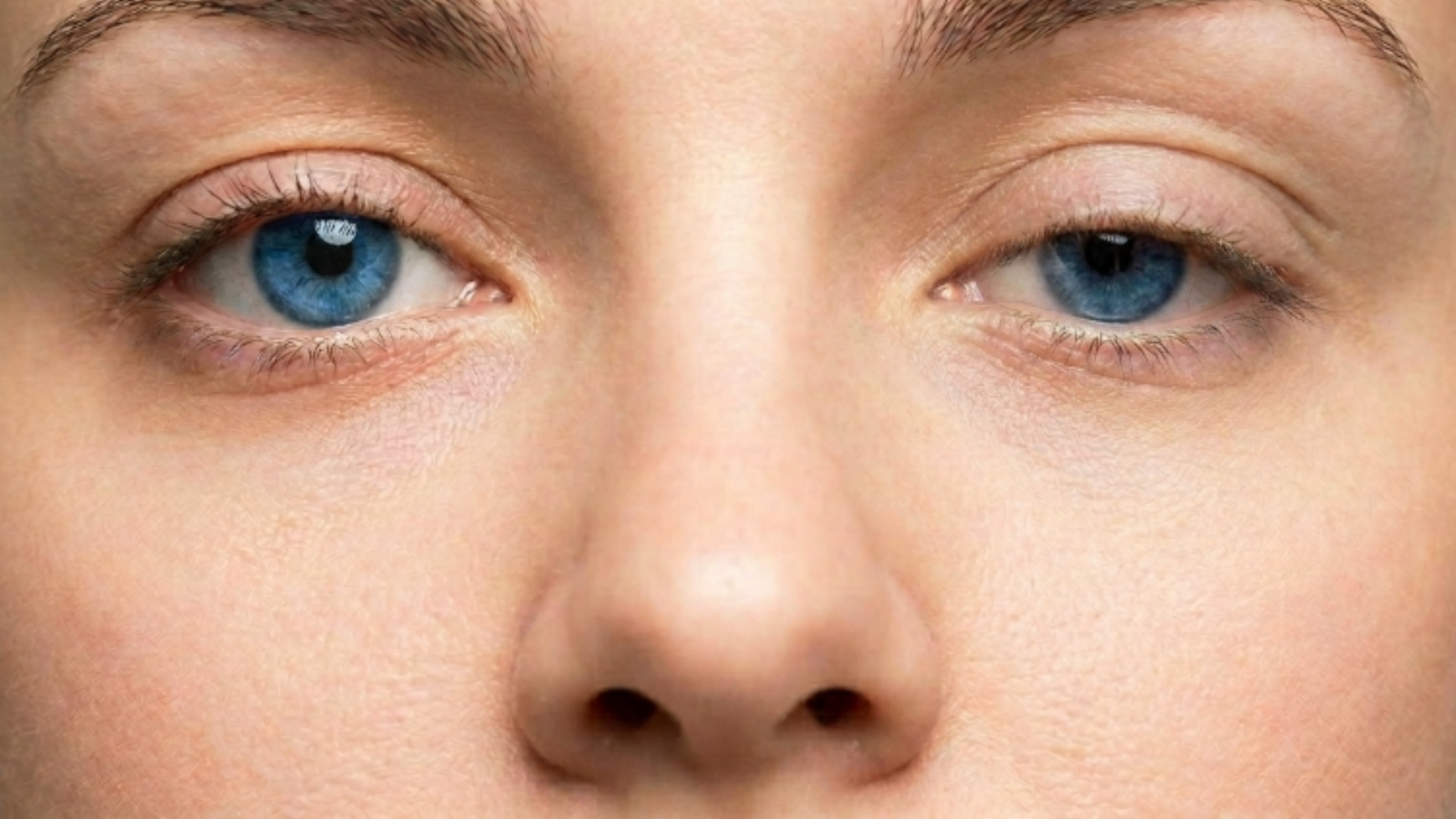
Upper eyelid ptosis is not simply excess skin that develops with age, but a persistent condition that affects vision and, consequently, reduces quality of life.
At the VIRTUS Institute, ptosis is treated by a plastic surgeon or an ophthalmologist using blepharoplasty.
Upper eyelid ptosis is a pathological condition in which the muscle responsible for lifting the upper eyelid does not function properly. Unlike age-related changes, ptosis causes the eyelid to droop enough to partially or completely cover the pupil, restricting the field of vision.
Eyelid ptosis can be congenital or acquired. With age, the muscle that lifts the upper eyelid, or its tendon, may stretch, leading to ptosis. Another common cause is damage to the nerves that control this muscle. Ptosis may also develop as a result of serious medical conditions, such as a stroke, paralysis of the oculomotor nerve, or a brain tumor. Lower eyelid ptosis is more commonly associated with weakening of the orbicularis oculi muscle due to the natural aging process.
Ptosis is often accompanied by dermatochalasis (excess skin of the upper eyelid), but the condition itself is primarily caused by dysfunction of the muscle that lifts the eyelid. As a result, the main symptoms are related to impaired vision:
If you experience these symptoms, you should schedule a consultation with an ophthalmologist.
In most cases, ptosis affects only one eyelid, resulting in facial asymmetry. Bilateral ptosis is less common. Upper eyelid ptosis is classified into three stages:
Surgical treatment is recommended for eyelid ptosis at any stage.
Upper eyelid ptosis is diagnosed by an ophthalmologist. If neurological symptoms are detected during the examination, the patient is referred to a neurologist. In some cases, additional diagnostic tests, such as a CT scan or MRI of the brain, may be required.
Sometimes, a person with ptosis first consults a plastic surgeon. During the examination, the surgeon checks whether the upper eyelid is covering the pupil. In cases of age-related eyelid drooping, the pupil remains fully visible despite excess skin. If the pupil is partially or completely covered, the surgeon refers the patient to an ophthalmologist for further evaluation. Together, they determine which specialist should perform the surgery.
If Botox is accidentally injected too close to the eye, it may temporarily block the muscle responsible for lifting the upper eyelid. In such cases, ptosis is temporary, and surgery is not required—the condition usually resolves as the effects of Botox wear off. In some cases, the lifting muscle may be affected by inflammation, and its function returns once the underlying condition has been treated.
In most cases that are not caused by temporary factors, surgery is required to correct upper eyelid ptosis. The condition can significantly reduce quality of life by making everyday activities — such as driving, working at a computer, and performing routine tasks — more difficult.
Blepharoplasty is a plastic surgery procedure designed to remove excess skin from the upper and lower eyelids and reposition or remove excess fat pads. When blepharoplasty is performed to correct ptosis, the surgeon also repairs the levator muscle responsible for lifting the upper eyelid.
Blepharoplasty is most commonly performed to correct age-related changes by removing excess tissue. However, some younger patients have prominent under-eye bags caused by enlarged fat pads rather than excess skin. In these cases, a transconjunctival lower blepharoplasty can be performed without external incisions, allowing the surgeon to remove or redistribute the fat pads through the inner surface of the eyelid.
Preparation for blepharoplasty follows a standard preoperative protocol. Required tests before surgery include:
It is advisable to stop smoking before surgery, as nicotine slows the healing process. Patients taking blood-thinning medications should consult their physician and, if medically appropriate, discontinue these medications approximately two weeks before surgery. Before undergoing blepharoplasty, patients should also have an ophthalmic examination and, if necessary, a consultation with a primary care physician or internist.
Upper eyelid ptosis correction can be performed under either general or local anesthesia. For ptosis surgery, general anesthesia is often preferred because it is psychologically more comfortable for the patient to remain asleep throughout the procedure. After blepharoplasty under general anesthesia, patients are typically discharged from the hospital within five to six hours.
In contrast, isolated upper blepharoplasty performed to correct age-related changes is carried out under local anesthesia in about 80% of cases. This is a quick procedure that usually takes no more than 30 minutes, and patients can leave the clinic approximately one hour later. Local anesthesia effectively eliminates pain, making the procedure well tolerated without significant effects on the body.
Two days after blepharoplasty, patients usually begin a course of physiotherapy (typically 10 sessions) to promote faster healing. Sutures are removed five to seven days after surgery. The incision is covered with special adhesive strips that protect it from external factors, gently compress the upper and lower eyelids to reduce swelling, and serve as an antiseptic dressing.
During the first week, swelling may make it uncomfortable to read or work at a computer, but these symptoms improve as the swelling subsides. For the first three weeks after surgery, patients should avoid:
If a patient wishes to enhance the rejuvenating effect of blepharoplasty with Botox injections, it is recommended to wait three to four months after surgery.
The final outcome can be assessed once the swelling has completely resolved, usually after completing the recommended physiotherapy. The primary functional benefit is that the pupil is no longer obstructed, restoring the visual field and improving vision. From an aesthetic perspective, the face becomes more symmetrical, and the eyes appear more open and refreshed.
Exercises are generally not effective for upper eyelid ptosis because the condition is caused by dysfunction of the muscle or tendon responsible for lifting the eyelid. These structural changes cannot usually be corrected with exercise alone. Therefore, upper eyelid ptosis is treated surgically.
If upper eyelid ptosis occurs after Botox injections, the condition usually resolves on its own as the effects of the medication wear off. B vitamins may be recommended to support nerve function and muscle innervation. If the eye becomes dry, lubricating eye drops can help relieve discomfort. Although these measures do not treat temporary ptosis directly, they can improve comfort while recovery takes place.
Upper eyelid ptosis can significantly reduce quality of life because it interferes with normal vision. This may affect personal safety as well as the ability to perform everyday activities independently.
Hooded eyelids are usually the result of age-related changes that cause excess skin to develop over both upper eyelids. Ptosis, on the other hand, is a pathological condition caused by dysfunction of the muscle that lifts the eyelid and most often affects only one eye. In ptosis, the eyelid partially or completely covers the pupil, leading to impaired vision.
Pseudoptosis of the upper eyelid occurs when a large amount of excess skin hangs over the eyelid to the point of covering the pupil. Both true ptosis and pseudoptosis can be corrected with blepharoplasty.

Get useful tips for beauty and health from the best specialists of the VIRTUS Institute of Advanced Medicine!
 67 4 min.
 71 4 min.
 126 3 min.
 116 9 min.
 1256 2 min.
 286 6 min.
 354 4 min.
 396 7 min.
 487 6 min.


 Submit your review
 Ask a question


Leave an application for an appointment at the clinic
We thank you for contacting the VIRTUS Institute.
The administrators will contact you shortly to clarify the details of the visit.
Just leave your phone number - we will book you in within 1 minute.

We will definitely take your feedback into account to improve the quality of work and improve the standards of service of the Institute of Advanced Medicine “VIRTUS”. Have a nice day!
We invite you to review feedbacks on a special page, which contains video and text feedbacks from the site and the VIRTUS guestbook..
Every day we work to improve the quality of work and the standards of the VIRTUS Institute, and customers’ recognition is the most valuable asset that we are proud of!

Your question will be addressed to the VIRTUS subject-matter specialist.
Your question will be addressed to the VIRTUS subject-matter specialist. The answer will be sent to the specified e-mail, as well as to the “Questions and Answers” page without specifying your data
We hope you find it interesting and useful to study what questions were asked by other clients and patients of the VIRTUS Institute: