



Laser rejuvenation
Laser rejuvenation is not only about reducing wrinkles but also about improving skin quality. Hanna Tsepkolenko, Head of the Department of Regenerative, Laser and…



The administrator of VIRTUS will contact you shortly




Genital warts are one of the most common viral lesions, occurring in both women and men during periods of increased immune system stress.
They are caused by the human papillomavirus (HPV), which has numerous types (400–600). It has been proven that 28 of these types can cause cancer of the mucous membranes not only of the cervix, vagina, and vulva, but also of the anal region and oropharynx. However, unlike HPV itself, genital warts can be successfully treated either medically or surgically.
Genital warts are a manifestation of HPV infection affecting the mucous membranes of the genital organs, the perianal area, and sometimes the oral cavity. Single warts are quite common and usually go unnoticed, but over time they can spread, increase in size, become traumatized, and lead to significant bleeding.
Therefore, genital warts should be removed, as it is much easier to treat a single lesion than multiple ones.
Both papillomas and condylomas are the result of the same process — a viral infection. The difference between them lies mainly in terminology: wart-like growths on the skin are called papillomas, while those on the mucous membranes of the genital organs are called condylomas. Accordingly, in the first case patients usually consult a dermatologist, while in the second they see a gynecologist (or urologist).
Genital warts can vary in appearance. They may present as a single wart-like growth measuring from 1 mm to 3 cm, multiple lesions resembling a cauliflower-like structure, or a single «mother» wart surrounded by smaller «offspring» growths. Their color can also vary, ranging from beige to red. Overall, from an aesthetic point of view, condylomas are not visually appealing.
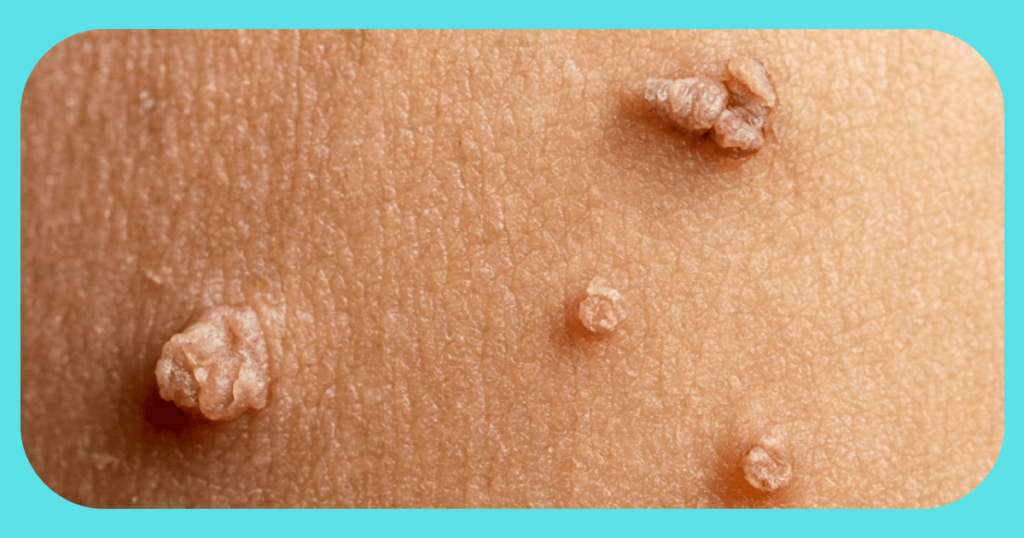
There are two main types of condylomas: genital (exophytic) and flat (endophytic). Flat condylomas grow inward within the epithelium and are usually located on the cervix and vaginal walls. They are caused by oncogenic types of HPV and carry a higher risk of malignant transformation.
Genital warts appear on stratified squamous epithelium, which lines the mucous membranes of the vagina, vulva, the glans penis, the anus, rectum, and oropharynx. In women, condylomas may also develop on the labia. However, it is important to note that certain types of cancer can resemble genital warts. Therefore, in case of any doubt, the tissue must be sent for histological examination.
Human papillomavirus (HPV) is extremely widespread, and almost all adults are infected with one or more of its strains at some point in their lives. If only one strain is present and the viral load is low, the immune system is usually able to eliminate it. However, the higher the viral load, the more difficult it becomes for the immune system to cope.
Several triggering factors may lead to the development of genital warts, including:
Therefore, in the treatment of condylomas, it is important to reduce the burden on the immune system. Although there is currently no cure for HPV itself, there are treatments that can improve both systemic and local immune response.
When a patient visits a gynecologist with a complaint of a suspected condyloma, the doctor usually begins with a medical history review, since in rare cases a malignant process may be hidden behind what appears to be a genital wart.
The diagnosis of condylomas typically includes:
A colposcope allows the physician to examine the mucous membranes of the genital tract and surrounding skin under high magnification (from 4 to 25 times). During the procedure, acetic acid or Lugol’s iodine solution is applied to suspicious areas, and abnormal tissues react in a characteristic way to these agents. The gynecologist then performs a targeted biopsy of the most suspicious area to obtain an accurate diagnosis. If histology confirms condyloma, treatment can begin. If the histological result suggests another condition, the patient is referred to a gynecologic oncologist.
Treatment of genital warts in women depends on their location. For example, multiple warts on the skin of the labia majora or minora are treated with topical agents (creams and ointments) that reduce viral activity, after which the remaining lesions may be removed using laser therapy.
Less commonly used surgical methods include:
The goal of all surgical methods is to destroy the epithelium affected by HPV. This reduces the overall viral load, making it easier for the immune system to eliminate the remaining infection.
If genital warts are located on the external genital organs and are few in number, they can sometimes be treated without surgical removal. In such cases, a gynecologist prescribes topical medications.
Genital and anal warts are removed using laser vaporization, cryodestruction, radiofrequency methods, or chemical agents. In most cases, laser removal is used, during which the affected epithelium is effectively vaporized.
However, if even a single altered (potentially malignant) cell remains in the basal layers, a cancerous process may develop deep within the tissue. When cancer becomes visible on the surface, treatment may already be too late. For this reason, at the VIRTUS Institute, condyloma removal is performed only after receiving a histological report.
Condyloma removal is usually performed under local anesthesia, so the only painful part is the injection itself. If the wart is located in a particularly sensitive area near the clitoris, sedation is administered first. While the patient is asleep, local anesthesia is injected and the removal procedure is carried out.
The procedure is usually performed within one week after the end of menstruation, as this period is considered optimal for better healing. However, if a woman has accompanying urogenital conditions (for example, trichomoniasis or other sexually transmitted infections), these must be treated first.
In the vast majority of cases, laser therapy is used to remove condylomas. It is a fast and painless method (performed under local anesthesia). The laser thermal wave does not penetrate deeply into the epithelium; it acts only at the point where the beam contacts the mucosa, minimizing damage to surrounding tissues.
Healing after removal of genital warts typically takes one to two weeks. If the lesions were located on the vaginal walls, the patient is prescribed antiseptic suppositories for 10–20 days. If they were on the external genital organs, topical agents with antibiotics and analgesic components are used.
During recovery, standard restrictions apply. The patient should avoid swimming pools, baths, and open water, and maintain sexual abstinence. A follow-up gynecological examination is usually scheduled 14 days after the procedure, and if healing is satisfactory, the patient can return to normal life.
Genital warts may recur in cases of new HPV infection or an increased viral load. If a woman had a single small wart and injured it during depilation (with a razor, waxing, or sugaring), the virus can spread to surrounding tissues and infect them. That is why laser hair removal is considered the safest method, as it targets hair follicles precisely without damaging surrounding tissue.
There are cases in medical practice where genital warts resolve spontaneously. For example, when a woman moves away from a high-stress environment (such as a conflict zone), stabilizes emotionally, and treats accompanying conditions. As chronic immunosuppression decreases, warts may regress along with it.
As they grow, genital warts can cause aesthetic discomfort and may become traumatized, leading to bleeding. The real danger lies in their potential to undergo malignant transformation and develop into cancer of the mucous membranes. This happens relatively rarely, but such cases cannot be excluded.
At home, it is primarily impossible to make an accurate diagnosis, especially when condylomas are located on the cervix, vulvar mucosa, or other hard-to-reach areas. Without proper diagnosis, adequate treatment is not possible.
Theoretically, it is possible to get rid of genital warts permanently if there are no further sources of HPV infection after their removal. This means that both partners remain faithful to each other and do not carry HPV.

Get useful tips for beauty and health from the best specialists of the VIRTUS Institute of Advanced Medicine!

 70
70  4 min.
 74 4 min.
 129 3 min.
 118 9 min.
 1257 2 min.
 289 6 min.
 355 4 min.
 396 7 min.
 487 6 min.


 Submit your review
 Ask a question


Leave an application for an appointment at the clinic
We thank you for contacting the VIRTUS Institute.
The administrators will contact you shortly to clarify the details of the visit.
Just leave your phone number - we will book you in within 1 minute.

We will definitely take your feedback into account to improve the quality of work and improve the standards of service of the Institute of Advanced Medicine “VIRTUS”. Have a nice day!
We invite you to review feedbacks on a special page, which contains video and text feedbacks from the site and the VIRTUS guestbook..
Every day we work to improve the quality of work and the standards of the VIRTUS Institute, and customers’ recognition is the most valuable asset that we are proud of!

Your question will be addressed to the VIRTUS subject-matter specialist.
Your question will be addressed to the VIRTUS subject-matter specialist. The answer will be sent to the specified e-mail, as well as to the “Questions and Answers” page without specifying your data
We hope you find it interesting and useful to study what questions were asked by other clients and patients of the VIRTUS Institute: