



Laser rejuvenation
Laser rejuvenation is not only about reducing wrinkles but also about improving skin quality. Hanna Tsepkolenko, Head of the Department of Regenerative, Laser and…



The administrator of VIRTUS will contact you shortly

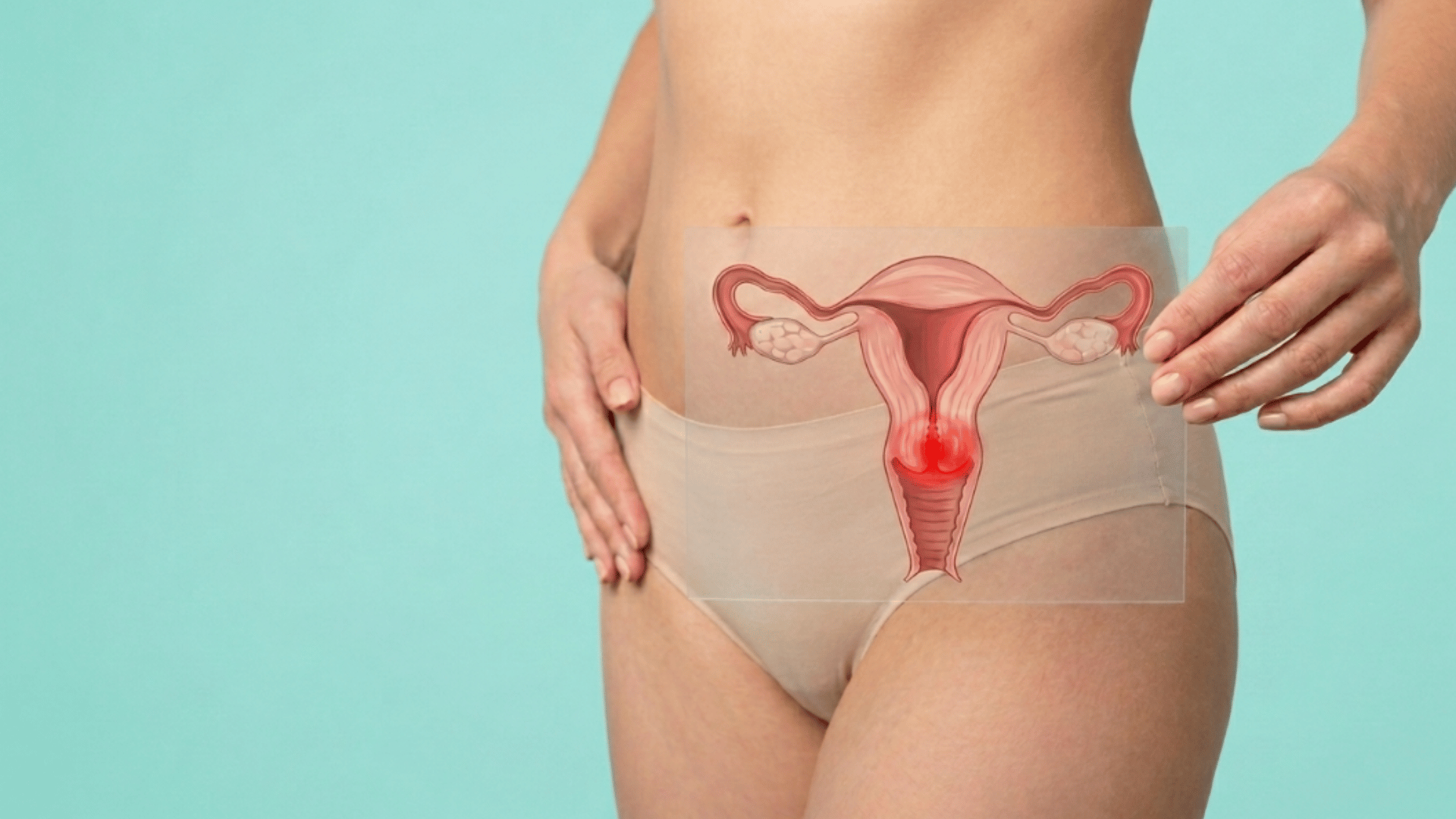


Cervical erosion is an outdated term that refers to damage to the surface epithelium. It is essentially a type of abrasion, similar to what occurs when you fall and scrape your knee. Nowadays, the term «erosion» is used to describe various changes in the cervical epithelium, each of which has its own proper medical name.
Ectopia of the columnar epithelium (pseudo-erosion) is למעשה a normal condition in which the epithelium from the cervical canal extends onto the surface of the cervix. In the past, ectopia was commonly treated, but today, if no abnormalities are detected during colposcopy and cytological examination, the patient is simply monitored by a doctor.
Another condition referred to as erosion is cervical ectropion. It occurs as a result of trauma, particularly during childbirth due to deformation, tears, and similar factors. After the cervix opens and closes, the epithelium essentially turns outward, meaning that the inner lining of the cervical canal becomes exposed on the outside. With ectropion, patients may sometimes complain of very heavy discharge and frequent inflammation—in such cases, treatment is required.
The area where the columnar epithelium meets the squamous epithelium is called the transformation zone, and if any pathology develops (such as dysplasia or cervical cancer), it most often occurs in this area. Therefore, in cases of cervical erosion, a gynecologist should perform an examination, conduct colposcopy, and take samples for cytological analysis, since more serious conditions may be hidden behind both ectopia and ectropion.
Ectopia and ectropion of the cervix are usually asymptomatic, and a woman may not notice their presence. However, in some cases, symptoms may include heavy discharge, persistent inflammation, and contact bleeding. If these signs appear, it is important to consult a gynecologist and check for cervical erosion.
The transformation zone is a congenital area of change, so ectopia is considered a normal variant rather than a pathology. The epithelium usually restores itself by the age of 25–27 without any intervention. Even if ectopia has not fully epithelialized but all test results are normal, no treatment is necessary. The main cause of ectropion (cervical erosion) in most cases is trauma during childbirth.
Cervical erosion itself is not dangerous, but it may mask more serious conditions such as dysplasia or even cervical cancer. During cervical erosion, inflammation occurs more frequently, which can also be transmitted to male partners. Therefore, it is important to have regular check-ups with a gynecologist, including colposcopy.
To properly assess the condition of the cervix, a gynecologist performs an examination using a microscope (colposcopy). If necessary, additional tests may be prescribed, such as a biopsy of a suspicious area of epithelium, testing for human papillomavirus (HPV), and cytological examination (Pap smear). Further management depends on the results obtained.
Usually, if a woman has no symptoms, cervical erosion only requires observation. However, depending on indications, medical or surgical treatment may be recommended.
Medical therapy for cervical erosion involves the use of anti-inflammatory drugs in the form of vaginal suppositories, baths, and similar treatments. This is important because if inflammation is present, other treatments may not be effective or the cervix may heal much more slowly. Further treatment is determined individually. For example, if only ectopia is present but the woman has symptoms and discomfort, laser vaporization of the cervix or radiofrequency treatment may be recommended.
Radiofrequency treatment is a modern minimally invasive surgical method. A directed beam of radio waves is used to evaporate the affected tissue while minimally damaging surrounding healthy structures. In most cases, one session is sufficient to remove the lesion.
Laser treatment works on the same principle as radiofrequency therapy, with the only difference being the type of energy used. Laser removal of cervical erosion usually requires a single procedure lasting about 20 minutes.
Before the development of laser technologies, cryodestruction was one of the most common methods of treating cervical erosion. However, today it is considered less effective and potentially problematic because it is difficult to precisely control the depth of cold exposure. As a result, it may «hide» the lesion in deeper layers of the epithelium—so it may not be visible on the surface, but dysplasia can still be detected during endoscopic examination. For this reason, this method is now rarely used.
Cauterization involves the use of electric current to treat the affected area. However, this method is associated with a higher risk of complications, such as cervical stenosis and scarring. Today, more modern and less traumatic treatment options are preferred.
The treatment method for cervical erosion is selected individually for each patient. If cervical ectropion is present, especially when there are signs of cervical dysplasia, a biopsy is taken from suspicious areas for histological examination. Based on the results, the treatment plan is determined:
Treatment of cervical erosion after childbirth is possible a few months after delivery.
Recovery depends on the type of lesion, its size, and the treatment method used. For example, healing after laser coagulation is faster than after conization.
Complete healing of the cervix and full epithelial recovery takes about two months. However, the strict restriction period usually lasts 3–4 weeks. During this time, it is not allowed to:
Light bleeding in the first weeks is normal. A follow-up examination is usually scheduled after 2–3 months.
After procedures such as laser, radiofrequency, or cauterization, a scab forms on the cervix and gradually heals on its own. If a woman ignores medical restrictions during the first 3–4 weeks (for example, visits a sauna), it may cause heavy bleeding. In such cases, immediate medical attention is required. It is always better to follow recommendations from the start.
Sometimes a complication such as narrowing of the cervical canal may occur. This is more likely after conization than after vaporization and depends on individual factors.
A rare complication is cervical stenosis, a pathological narrowing of the cervix. This can lead to painful menstruation and difficulties with cervical dilation during childbirth.
Not all cases of cervical erosion require immediate treatment; the balance between benefits and risks must be considered. Treatment is necessary when there are additional indications such as suspicion of dysplasia or cancer, heavy discharge, frequent inflammation, or contact bleeding that affects quality of life.
Accurate diagnosis is crucial because «erosion» may hide more serious conditions. In particular, dysplasia is most often caused not by a defect in the epithelium itself, but by high-risk human papillomavirus (HPV). Most women are exposed to HPV through sexual contact, and further development depends on the immune system, additional bacterial infections, the number of viral strains, and other health conditions.
In most cases, cervical ectopia does not require treatment and only needs observation. Treatment is indicated only when symptoms or complaints are present.
Cervical erosion does not affect fertility or the ability to become pregnant. In very rare cases, difficulties with conception may occur due to significant narrowing (stenosis) of the cervical canal.
Cervical erosion appears as a red area or «wound-like» patch on the pink cervical epithelium. It usually does not cause discomfort and only requires medical monitoring.
If there is no suspicion of dysplasia or cancer, cervical erosion may be managed at home after consultation with a doctor. For ectopia, anti-inflammatory and healing vaginal suppositories are sometimes used. However, in the case of ectropion, especially when structural changes are already present, home treatment may only mask the problem rather than resolve it.

Get useful tips for beauty and health from the best specialists of the VIRTUS Institute of Advanced Medicine!

 70
70  4 min.
 74 4 min.
 129 3 min.
 118 9 min.
 1257 2 min.
 289 6 min.
 355 4 min.
 397 7 min.
 489 6 min.


 Submit your review
 Ask a question


Leave an application for an appointment at the clinic
We thank you for contacting the VIRTUS Institute.
The administrators will contact you shortly to clarify the details of the visit.
Just leave your phone number - we will book you in within 1 minute.

We will definitely take your feedback into account to improve the quality of work and improve the standards of service of the Institute of Advanced Medicine “VIRTUS”. Have a nice day!
We invite you to review feedbacks on a special page, which contains video and text feedbacks from the site and the VIRTUS guestbook..
Every day we work to improve the quality of work and the standards of the VIRTUS Institute, and customers’ recognition is the most valuable asset that we are proud of!

Your question will be addressed to the VIRTUS subject-matter specialist.
Your question will be addressed to the VIRTUS subject-matter specialist. The answer will be sent to the specified e-mail, as well as to the “Questions and Answers” page without specifying your data
We hope you find it interesting and useful to study what questions were asked by other clients and patients of the VIRTUS Institute: