



How to get rid of stretch marks on the body
Modern cosmetology offers a wide range of procedures that help reduce stretch marks without surgery or pain. The golden rule is that the sooner…



The administrator of VIRTUS will contact you shortly




Ovarian cysts come in different types, each with its own causes, clinical features, and prognosis. Some types of ovarian cysts are successfully treated with medication and do not require surgical removal. Therefore, careful diagnosis and a detailed medical history play a key role when choosing therapy.
An ovarian cyst is a fluid-filled sac located within the structure of the ovary. Ovarian cysts can be benign (in most cases) or malignant.
Polycystic ovary syndrome (Stein–Leventhal syndrome), despite the similarity in name, has nothing in common with ovarian cysts. It is a genetically determined disorder of folliculogenesis, in which the ovary and follicles are unable to reach the required ovulatory size. Ovulation does not occur, and the woman cannot become pregnant.
In addition, under the influence of luteinizing hormone, the follicles produce the male sex hormone testosterone. Therefore, patients with PCOS often present with excessive hair growth on the face and body, skin problems, and redistribution of body fat in a male pattern.
PCOS is difficult to treat and may persist even after the end of reproductive function; however, it can be managed with hormonal contraceptives.
Separately, another condition similar to PCOS should be noted — multifollicular ovaries. It is caused by hormonal imbalances (hyperprolactinemia, hypothyroidism, metabolic syndrome). Therefore, instead of prescribing combined oral contraceptives (COCs), a gynecologist, in cooperation with an endocrinologist, should normalize prolactin levels and thyroid function, and in cases of hyperinsulinemia and excess body weight, help the patient reduce weight.
An ovarian cyst may be an incidental finding during an ultrasound examination. However, more often it presents with symptoms such as delayed menstruation and lower abdominal pain — particularly during certain positions, sexual intercourse, or physical activity. If the ovarian cyst is large enough, it may externally appear as a noticeable deformation in the corresponding area of the abdomen.
Blood markers help determine whether a cyst is benign or malignant. An MRI with contrast may also be prescribed: if the cyst contains a solid component or vascularized structures, it may require removal. The main types of ovarian cysts include:
Thus, most types of ovarian cysts are treated without surgery.
A follicular ovarian cyst forms when a follicle grows beyond its normal size. This may occur due to hypothyroidism and other hormonal dysfunctions, hyperprolactinemia, stress, and disrupted sleep and rest patterns. Therefore, to identify the exact cause of an ovarian cyst, a detailed medical history and hormonal blood tests are necessary. An endometriotic ovarian cyst is considered a «disease of civilization» and occurs because the female body is evolutionarily adapted to a higher number of pregnancies and significantly fewer menstrual cycles.
An ovarian cyst is diagnosed using pelvic ultrasound. If necessary, an MRI may be additionally prescribed to determine whether there are solid or dense components inside. A large cyst can also be detected by a gynecologist during a manual examination.
As a rule, functional and hemorrhagic cysts do not require additional treatment and resolve within 2–3 months. Medical therapy includes hormonal medications aimed at correcting deficiencies and improving endocrine function, and, if necessary, pain relief medication.
The decision about surgery is made individually for each patient depending on the clinical situation. Indications for surgical intervention include:
If a functional cyst ruptures, nearby capillaries become overstretched and slow bleeding begins. Within 1–2 days, blood may fill the abdominal cavity, which leads to the need for emergency surgical intervention.
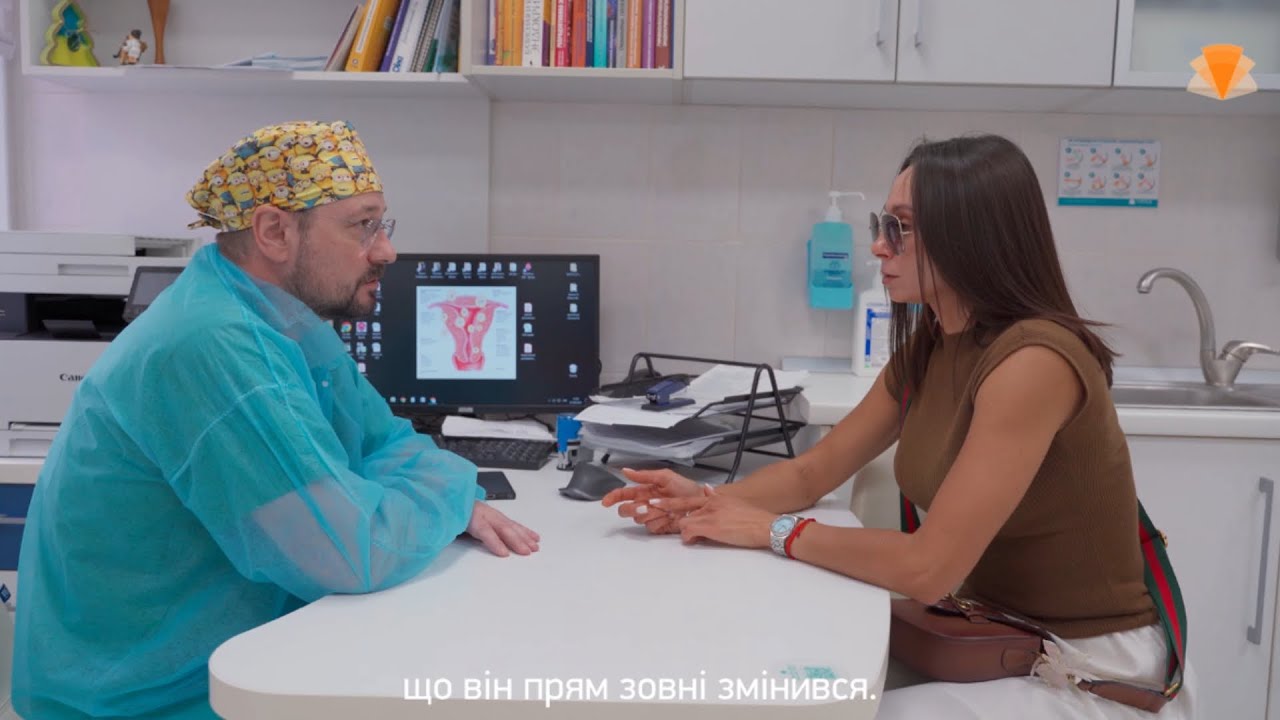
Preparation for laparoscopic ovarian cyst removal depends on the patient’s age. Women under 45 years old should undergo a complete blood count, ECG, chest X-ray (fluorography), ultrasound of the lower extremities and pelvic organs, and also consult an anesthesiologist and a family doctor. Patients over 45 should additionally have an echocardiography (heart ultrasound) and consult a cardiologist. A full list of required tests and examinations can be obtained during a consultation with a gynecologic surgeon.
Ovarian cyst removal is a modern laparoscopic procedure. The surgeon makes three small incisions in the abdomen through which a camera and two instruments are inserted. With their help, the cyst is identified and removed. This type of surgery is generally well tolerated by patients.
After surgical treatment of an ovarian cyst, the patient stays overnight in the hospital under medical supervision. In the morning, after walking, drainage is performed to remove any fluid that may have remained in the abdomen, a dressing is applied, and the patient is discharged home. Sutures are removed after 10–14 days; until then, physical exercise and sexual activity should be avoided. However, walking is encouraged. After one month, all restrictions are lifted, and the woman returns to her normal lifestyle.
In most cases, an ovarian cyst does not need to be removed. If a benign cyst does not cause symptoms, it can be monitored by a doctor for a long time. It should not be expected that a doctor will prescribe suppositories to dissolve an ovarian cyst — no such medications exist.
A ruptured ovarian cyst is primarily indicated by a sudden, severe sharp pain in the lower abdomen. If intra-abdominal bleeding begins, symptoms may gradually include weakness, tachycardia, pale skin, dizziness, and shortness of breath.
Prevention of follicular cysts includes a healthy lifestyle: sufficient sleep, an appropriate work schedule, personal hygiene, balanced nutrition, monitoring the menstrual cycle, and timely gynecological consultations when delays occur. In the case of endometriotic cysts, combined oral contraceptives (COCs) are used both as treatment and prevention.
If an ovarian cyst reaches a large size, deformation may be observed in the area where it is located — the abdomen becomes enlarged. In some cases, an ovarian cyst not only causes pain but also leads to a general deterioration in a woman’s condition: weakness, dizziness, nausea, and vomiting.
An ovarian cyst may have no symptoms at all, or it may present as pain in the lower abdomen. The pain can be mild or severe and may be felt both in the groin and in the lower back. If it hurts on the left side, it is a left ovarian cyst; if on the right, it is a right ovarian cyst.
A ruptured ovarian cyst can indeed be painless and unnoticed. However, more often it presents with sudden severe pain and poor general condition. If unbearable sharp pain lasts longer than 30 minutes, it is necessary to go to the hospital and at least perform an ultrasound examination.

Get useful tips for beauty and health from the best specialists of the VIRTUS Institute of Advanced Medicine!

 258
258  2 min.
 116 3 min.
 101 3 min.
 101 3 min.
 144 1 min.
 92 4 min.
 148 4 min.
 792 2 min.
 209 4 min.


 Submit your review
 Ask a question


Leave an application for an appointment at the clinic
We thank you for contacting the VIRTUS Institute.
The administrators will contact you shortly to clarify the details of the visit.

We will definitely take your feedback into account to improve the quality of work and improve the standards of service of the Institute of Advanced Medicine “VIRTUS”. Have a nice day!
We invite you to review feedbacks on a special page, which contains video and text feedbacks from the site and the VIRTUS guestbook..
Every day we work to improve the quality of work and the standards of the VIRTUS Institute, and customers’ recognition is the most valuable asset that we are proud of!

Your question will be addressed to the VIRTUS subject-matter specialist.
Your question will be addressed to the VIRTUS subject-matter specialist. The answer will be sent to the specified e-mail, as well as to the “Questions and Answers” page without specifying your data
We hope you find it interesting and useful to study what questions were asked by other clients and patients of the VIRTUS Institute: